For years, hydraulics was practically the only option for moving large industrial loads.
Presses, compactors, recycling machinery and lifting systems relied on pumps, valves and hydraulic cylinders because there were no electric alternatives able to withstand certain forces. That is changing fast.
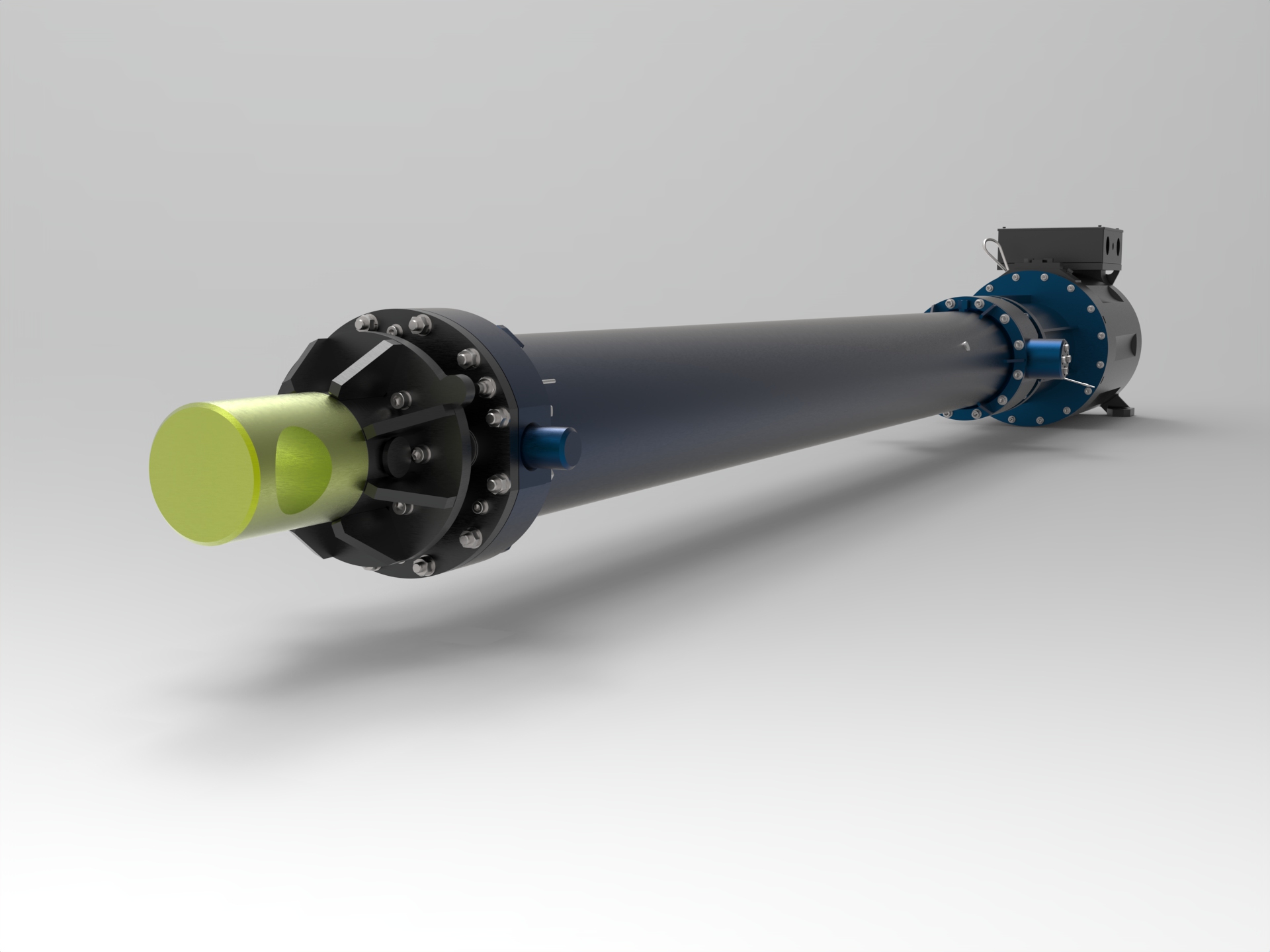
Today there are already electromechanical actuators ready to work above 300 tonnes, with long strokes and far higher levels of precision. In many industrial projects the debate is no longer “whether it can be electrified”, but how much maintenance, energy consumption and downtime you want to keep putting up with. In the Smart Eco-Motion Kit, Kernova develops electromechanical systems ready to replace hydraulic cylinders in heavy industrial machinery.
Technical comparison between hydraulic and electromechanical actuators in high-tonnage applications
How hydraulic actuators work in high-tonnage machinery
Hydraulics still dominates much of heavy industry. It can generate enormous forces using pressurised oil, something that for decades made it possible to move loads that other systems could not handle.
The problem appears in everything surrounding the system:
- Hydraulic pumps running continuously
- High energy consumption
- Oil leaks
- Circuit heating
- Frequent maintenance
- Loss of precision with wear
In many factories the actuator is not the real problem. Wear comes from valves, seals, hoses, filters or temperature variations that end up affecting the behaviour of the whole machine.
In addition, much of the energy consumed in hydraulics is lost as heat. That is where one of the big differences with modern electromechanical systems appears.
What advantages do electromechanical actuators have in heavy industrial applications
Today’s electromechanical systems already work in applications that once seemed reserved for hydraulics alone. Especially in industrial presses, recycling, agro-industry or lifting machinery.
In Kernova’s KRN-H series, developed to replace hydraulic cylinders, we work with loads above 300 tonnes and strokes above 4 metres.
The big difference lies in how the movement is generated. Instead of relying on pressurised oil, the system uses electric drive with high-precision mechanical transmission.
| Comparison | Hydraulic | Electromechanical |
|---|---|---|
| Precision | Variable | Up to ±0.1 mm |
| Energy consumption | High | Reductions above 35% |
| Maintenance | Frequent | Mainly greasing |
| Noise | High | Under 70 dB |
| Hydraulic oil | Yes | No |
The improvement in energy efficiency can exceed 80%, compared with the 60% typical of many hydraulic systems.
What about precision and control at high tonnage?
This is where the difference starts to become enormous.
In hydraulic systems, precision depends heavily on the state of the circuit, oil temperature, pressure and internal wear. Over time small deviations appear that affect the machine’s behaviour.
Electromechanical systems work with much more stable, repeatable control. This is especially noticeable in:
- Industrial presses
- Positioning systems
- Moulding machinery
- High-repetition automated processes
In many industrial plants, that precision reduces production rejects and cuts constant manual adjustments.
Moreover, when a hydraulic machine is converted to electromechanical, it is not enough to change the actuator. The complete machine architecture has to be reviewed: mechanical design, force transmission, sensors, drives, PLC, automation and control logic. At Kernova we develop that complete integration so the machine works with precision, stability and safety from the mechanics through to the final control.
What problems do many old hydraulic systems still have
Many machines still run on technology designed decades ago.
And that ends up generating an enormous list of accumulated problems:
- Oil losses
- Breakdown stoppages
- High electricity consumption
- Dependence on hard-to-find spares
- Behaviour variations with temperature
- Risks associated with hydraulic pressure
There are plants where the hydraulics run practically all day even though the machine is partly stopped. That drives up energy spending.
With electromechanical systems, the movement only consumes energy during the actuator’s actual operation.
Which industrial applications are migrating to electromechanics?
The transition is already happening in heavy machinery. Especially where maintenance and energy consumption weigh heavily on daily profitability.
The following are currently being electrified:
- Recycling presses
- Agricultural presses
- Injection moulding machines
- BMUs for buildings
- Industrial lifting systems
- Agro-industrial machinery
In many cases it is not even necessary to replace the whole machine. That is where industrial retrofit projects come in, such as those developed under transforming hydraulic systems into electric solutions.
What kind of company usually saves the most with electromechanics
The differences are much more noticeable in machinery that works many hours a day.
The longer the operating time, the greater the impact of:
- Electricity consumption
- Maintenance stoppages
- Hydraulic leaks
- Component replacement
- Loss of precision
In intensive industrial plants, a 35% energy reduction completely changes the annual operating cost. And many companies discover something more: maintenance stops dictating daily production.
Frequently asked questions
Can electromechanical actuators handle large industrial loads?
Yes. Systems ready to work above 300 tonnes in heavy industrial applications already exist.
Does electromechanics completely replace hydraulics?
Not always. It depends on the type of machine, work cycles and force or stroke requirements.
Do you need to change all the machinery to electrify it?
No. Many retrofit projects replace only the main hydraulic system while keeping much of the original machine.