Ensuring integrity and performance under real conditions.
In engineering, validation is a critical process for ensuring that components and systems meet the established specifications and requirements.
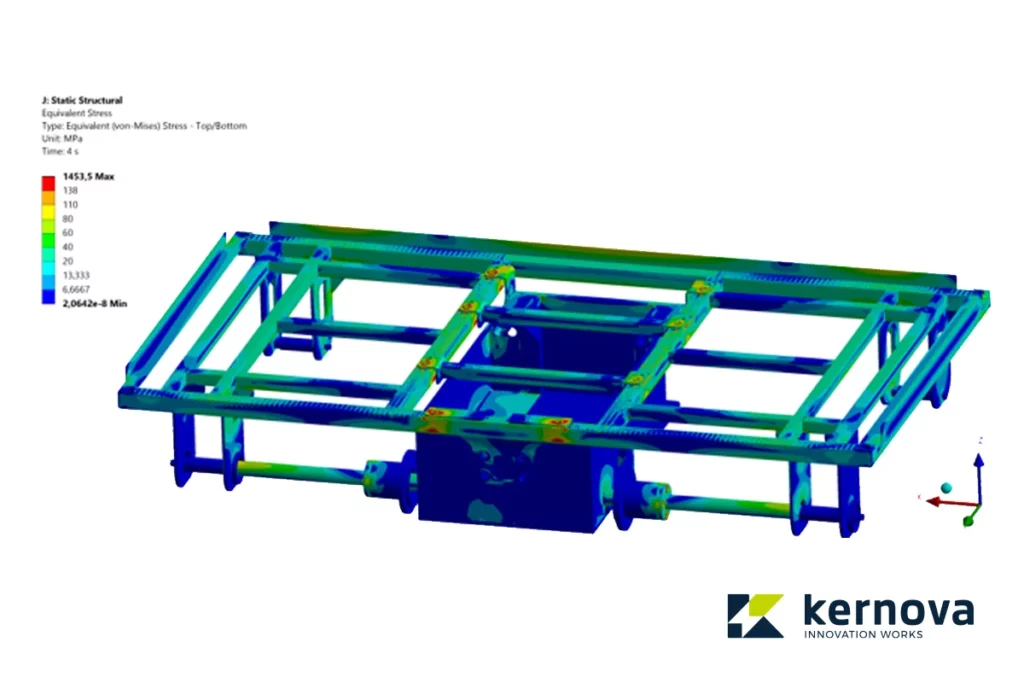
This process focuses on ensuring that products can withstand specific boundary conditions, forces, impacts, vibrations, accelerations and inertia.
Validation makes it possible to predict how components will behave in real working scenarios, avoiding failures during operation.
Here are some of the most important aspects to bear in mind regarding Validation in Engineering:
Compliance with Boundary Conditions
Boundary conditions are fundamental parameters that determine the environment in which a component or system will operate.
During validation, it is verified that these elements can work correctly under the expected conditions, such as extreme temperatures, humidity, pressure and other environmental factors.
This analysis is essential to make sure the product does not fail when exposed to these conditions during use.
Resistance to Forces and Impacts
As engineers, we must guarantee that components withstand the forces and impacts they will be subjected to.
This involves running tests that simulate the external forces that could act on the components, making sure their structural integrity is not compromised.
Validating forces and impacts helps identify potential weak points and makes it possible to take corrective action before mass production.
Vibrations and Accelerations
Vibrations and accelerations are critical factors in many fields of engineering, especially automotive and aerospace.
During validation, these conditions are simulated to make sure that components can withstand vibrations and accelerations without deteriorating or failing.
This is achieved using advanced simulation tools that make it possible to replicate operating conditions accurately and effectively.
And at Kernova we are specialists in this kind of simulation tools.
Inertia and Dynamic Behaviour
Validation also focuses on ensuring that components can handle inertia and dynamic behaviour during operation.
This is particularly important in systems that involve fast movements or abrupt changes of direction, where inertial forces can have a significant impact on the integrity of the component.
Thanks to our work we can predict these effects and help design components that resist them properly.
Component Integrity
One of the primary objectives of validation is to guarantee the integrity of all components under real operating conditions.
This is achieved by simulating working conditions to predict the behaviour of the components and make sure they will not fail.
It is not just about simulating the components, but their integrity under many factors; in this way we reduce risks and avoid costly failures in the future.
Advances in Simulation Tools
In the past, validation required building physical prototypes and subjecting them to various tests. This process, although effective, was expensive and lengthened development times.
With the advance of simulation tools it is now possible to replicate operating conditions with great precision without having to build physical prototypes.
These tools make it possible to carry out virtual tests, significantly reducing the costs and times associated with validation.
At Kernova we are confident that we are your best ally when it comes to validation tasks in the field of advanced engineering, thanks to our vast experience and innovative approach across different areas of engineering.
With more than 15 years of experience in industrial projects, we offer you mechanical design, finite element analysis (FEA/FEM) and BIM modelling services, guaranteeing precision and efficiency at every stage of the project.
Count on us!